CLP Beacon - Business Issues and Solutions

Showing posts with label service business. loyalty. Show all posts

Thursday, January 7, 2016

What Makes a Company Great?

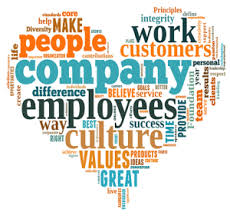
I was at a very interesting meeting hosted by Brett Olinger and Susan Howington, founder, Power Connections on Dec. 16, 2015.   There were about a dozen high level executives around the table with titles ranging from VP to COO to CMO to CEO.  Susan got us together to talk about business issues and she asked a relatively simple question: What makes a company great? And the subordinate theme of what kind of company would you want to work for or build?
As a tech executive and one involved in the entrepreneurial eco-system in southern California, I would have imagined that I would hear about things such as the latest and greatest technology that captures people’s hearts and minds.  Or maybe I was hoping to hear about the great opportunities for career advancement or companies doing social good. 

I did not hear of specific industries, technologies, functions, unique characteristics of the leaders or anything that you might glean from an employee survey.  Remember the ones commenting have been and are successful executives.   After listening intently – and contributing as well- I captured their thoughts into three areas:  Culture, Leadership, and Customer Focus.   And I have to admit that is probably the order of importance because to me, culture is a platform upon which to build and enact leadership and a customer philosophy.  As you read the following, just ask yourself about the companies for which you worked.  What made them good?  Why did you like coming to work?  What drove your passion?  What made these companies great for you?

Culture
Culture was the number one item.  Culture was a necessary but not sufficient condition for making a company great.  Think about Tony Hsieh of Zappos.  He has instilled a clear culture in that company that focuses on the customer.  Do what is right for the customer. Certainly his vision and bent is the customer.  But without a cultural underpinning, Zappos would not be as successful as it has been.   

Culture is also unique to a company.  It is hard to duplicate and is normally set by the CEO.  Think about other companies that are successful and have a truly unique culture.  Think about Disney and the culture about Imagineering.  Think about Intel and the culture of innovation.  Think about 3M and their culture that they encourage people to invest their time on new ideas.  Without a culture of innovation and support for innovators, many companies may not achieve success. 

We discussed other components of culture as well.  Those components included telling it like it is……. but respectfully and constructively.  (As an aside, I can certainly relate to this coming from Brooklyn, NY and have seen direct cultures like New York and oblique cultures like I have seen in the Mid-west.)  Another element was pushing employees to the next level, i.e. making them believe they can succeed and giving them opportunities to succeed.   In the process of encouraging people, the culture must also accept failure (fast failure is preferred) and must set up a reward system for those that are successful.  

Culture is also critical as the underpinning of being customer focused.   Think about a company that is just focused on the bottom line versus a company that is trying to help a customer and wanting them to be happy.  Think about your experience with Zappos.  Or if you have web service or webhosting from 1and1, think about the great customer service you have received from them.  Was it easy to talk with the company and its reps?  When they talked with you did you believe that you were the only person in the world on their mind or did you feel that you were imposing by asking them a question?   We heard a story this morning about how Steve Wynn chose people to work for him.  Applicants were told to go to another part of the building and when they got there, Steve was sitting behind a desk, rose to greet the applicant and wanted to see their reaction.  If they were friendly and responsive, they were hired.  True?  I am not sure but it makes a good story.

Leadership
We all know that leadership is critical.  Leadership starts with the CEO and filters down to people in the organization.   The leader sets the culture.  When I was head of marketing at US Cellular, our founding CEO, Don Nelson, was a great leader.  He selected an eclectic group of people, set the objectives and measured results meticulously and religiously.  But what distinguished him was his willingness to listen to his people, set and change vision and set a clear direction for the company.  

The result, during my tenure was that the company grew fourfold in revenue in only five years.   
Think back to the CEOs and possibly mentors you have had in your career.  What has distinguished them?   This morning, the executives around the table believed that not only did the CEO establish and set the culture for the company, in essence being the chief culture officer, but also set a clear and compelling vision for the company.  As the Cheshire Cat said, “if you don’t know where you are going, any road will get you there.”  Leaders know where they are going.

Coupled with the vision is the ability to articulate the clarity and alignment of the messages across the entire company, and in my humble opinion, do it in a personal way.   As companies grow, become more complex, and are geographically disbursed, having a common vision and alignment of messages are critical to ensure everyone is marching in the same direction.   In this case organizations become both effective in generating profits (the end game for most) and efficient in doing so. 

The group believed that a great company has a servant-leader.  A servant-leader focuses primarily on the growth and well-being of people and the communities to which they belong. By focusing on people first, it empowers employees to be successful.  It also has a mentoring quality enabling employees to trust the leader such that when these employees are pushed to success by the leader, they trust that their best interests, and in turn the company’s, are aligned.    To be a true servant leader, two other elements must ring true.  The leader must be authentic and must be transparent.  There should be no hidden motive or ego at play.

Customer Focus
As a businessman and marketing executive, I have written extensively and talked about customer focus.  The customer, the one who buys your company’s products and services, must be foremost in your mind.  Companies who are customer focused truly understand the behavioral drivers of the customer and why they buy your products and services.  

The executives at our meeting believed that great companies connect with the customer.  These connections may come from a better user interface, or the way they train their front line people to interact with customers.    We bandied about the concept of Customer Experience Officer because customers, who are not happy, not satisfied, become disloyal.   And, all of us recognized that retention of customers is critical to a company’s success.  Further if you connect with the customer and relate to the customer, if a company makes a mistake there are positive “chits” that have accrued over time and forgiveness by the customer of any faux pas is normally granted.

Note that customer focus relies on a specific culture.  Again, think back to Zappos or think about any experience you have had at a retail store or an online store.  Systems are critical to help achieve customer focus but in reality it is the people, those front line sales people and customer support people that guarantee that the customer is important. Most of us go to Starbucks to get coffee.   Think about your experience.  They ask your name and if you visit the same store more than a few times, the baristas and others will get to know you.  How do you feel?  Pretty loyal I would assume.  
Starbucks, Zappos, US Cellular and other companies have realized something very critical.  The people who interact with the customers ARE the brand.  Leadership sets the vision and a customer centric culture is established.  Yet customer focus is executed by the people.   All of us agreed that great companies are those that have this passion for the customer, exercised by supporting a customer first philosophy on the front line.

Going back to the original question of What makes a company great, it comes down to three areas:  culture, leadership, and customer focus.   All three are interrelated.  In short, great companies balance the needs of customers, employees, and owners.  What companies would you want to work for?  What makes a company great in your mind?  My partners and I will be glad to talk with you about your business issues and help you set a course so your company can be "great" as well.


For more thoughts and ideas, feel free to contact me at dfriedman@clevelpartners.net  or visit us at www.clevelpartners.net.  I will also guarantee that if you write or call me, I will pick up the phone and talk with you.  Why?  Because we, too, love our customers and we have implemented a culture in our company of helping and sharing.

Monday, December 21, 2015

StreetSavvy Marketing Predictions for 2016


StreetSavvy Marketing Predictions for 2016

It’s that time again when just about everyone has predictions for the New Year. In November, Forbes contributor Kimberly Whitler posted predictions from the C-suite.   Adam Davidi, from the Guardian, posted predictions on branding based on conversations with “experts.”   I am sure we will see predictions from Forrester, Gartner and others as well.

We, at C-Level Partners, don’t want to be left out.  My colleague, Vince Ferraro, and I have been C-level executives in marketing and general management for many years. We now consult with companies on marketing and their go-to-market strategies.   We decided to look at “Big M” marketing, relating to predictions for how companies and brands go to market and how they interact with customers.  So without fanfare and any biased perspective, we share these predictions for Marketing for 2016. 

Let me be candid.  While most of these are predictions based on our work with clients, with start-ups and in talking with our marketing colleagues, there are also some “aspirational trends” that we hope come true for the profession as well as we believe they are important for marketing professionals and the businesses they manage.  Some of these trends overlap and leverage each other.   To us, that will represent the power of good marketing.  In no particular order, our top sweet 16 are:

1.       Cognitive Commerce has begun.  Marketers will use information on customers from their databases, the internet, and other sources to build stronger relationships, build predictive algorithms, personalize content, and deliver products and services to meet their specific needs.

2.       The distinction between offline and online will disappear as real time analytics will unite both camps.  Marketers will consider all (omni) marketing channels to optimize their marketing programs based on cost, effectiveness, ROI and the satisfaction quotient from building relationships with customers.

3.       Branding will be from the inside out.  Companies will not push the brand but the brand will be built on trust, engagement, referrals, authentic dialog, and transparency.

4.       Digital Marketing will cease to exist as a standalone part of marketing.  There isn't a need for separation anymore. World class marketers will know how to market in a digital world. Traditional and online marketing not only will coexist, but one will leverage the other and work better together.

5.       Advances in video broadcasting and continued growth in mobile devices will change TV marketing forever.   Marketers will use new technologies to enable a more immersive experience and TV and other broadcast video usage will expand on all screens - laptops, desktops, tablets, smartphones, HDTVs and even screens in cars,( i.e. telematics).

6.       Content will be created specifically with video channels in mind.  Further, there will continue to be a migration to mobile video which will become de rigor on a company’s website, in blogs, in training, and on Youtube.  Youtube channels for marketers will continue to expand.  In addition, the use of video podcasting and live streaming are also in a growth mode.  The world is clearly digital and going video and marketers will take advantage of that. 

7.       Personalization will grow as its ROI is measured and as customers come to expect to be treated as individuals.  We, at C-Level Partners, have written that there are now 7Ps of marketing and personalization is one of them.  Technology and marketing automation will enable this to happen.  This personalization will improve company branding and the ability to build stronger relationships with customers.
8.       Marketers will get back to basics.   Solid, well planned marketing will trump the sexy marketing in the past.  The CMO and business leaders will focus on marketing as a strategic investment to generate profitable revenue.

9.       The human touch will return to marketing.  How many of you love to listen to an automated customer service system saying that “your call is important to us…”  That’s bull!  Companies will realize that you are important and will show it by having more touch than tech or at least do a better job of integrating the two.  Being human will also apply to helping customers understand the value of the company’s products and determining what motivates buying behavior.  This is like getting back to the future… and I love it.

10.   Employee experience (EX) will be as important as customer experience (CX).  Engaged employees are critical because at the front line – in retail, sales and customer service- they ARE the brand, or at least a fair representation of it.   Engaged employees also feel part of the company, behave like owners, and will be promoters of the company's products and services.  According to our anecdotal evidence, only about 30% are engaged today.  Think Zappos, Starbucks, 1and1, and Jet for companies who provide both good EX and CX.

11.   Marketing and Data Science will be the new dynamic duo.   This will be key to understanding the customer persona from many angles - demographics, psychographics, sentiments, and buying behavior.  Vince and I, both being engineers, can relate and understand this dynamic.  We expect to see the CIO and CMO becoming BFF’s.  

12.   As a corollary to #11, data will be the new currency for the younger generation. Data will enable the ability to personalize the marketing message and make that message more meaningful and differentiated for a particular customer.   But it doesn’t only apply to the younger generation; big data will be used to help understand buying behavior of all customers and couple that information with the dynamics of profitable revenue growth for the corporation.   The new marketer will be, must be, a datahead or recruit the right people in his/her organization who have the skills to analyze the myriad of data available from business and marketing systems.

13.   Marketers will provide more original insights into business.  Marketers will not be mere curators of data and content.  The key word is original.  By having more insight into business, the CMO will be able to justify his/her seat at the executive table.  (This is a belief and expectation!)

14.   Customer success will be determined by a combination of satisfaction, retention, and referral.  We have always believed that the combination of the three components will yield the most loyal customers.   In conjunction with this, customers themselves, through social media, will become the company’s best sales people. Technology to help build customer engagement will continue to evolve and become more sophisticated.

15.   Marketing and selling will be in an omni-channel world.   Marketing execs will understand the buying persona of their customers and will use math and analytics to optimize the sales and distribution channels.  But the key here is that it will not be one channel vs. the other.  The marketer will blend online and offline, retail and wholesale, third party distribution and direct to ensure the buying experience matches the customer and to improve the profitability of the company.

16.   Chief Marketing Officers will evolve to become strategic businesspeople first and “marketing" executives second.  This is our wish and expectation; therefore, we took the liberty to include it as one of our predictions.  The CMO will be the linking pin from the outside world of the customer to the inside world of production, manufacturing and operations.  He/she will have a unique view on building and capturing valued.  In the past, we have not seen this from most of our traditional marketing colleagues as many have been focused on one area e.g. advertising, digital, brand, and product.  The new marketing executive will be a generalist, a businessperson with a focus on top and bottom line growth, steeped in data analytics, change management, and growth levers, coupled with creative and innovative bent.  We may be wrong about this one for 2016, but we believe it will eventually take root over time.


We would be interested in hearing your thoughts on your sweet 16 predictions for 2016.  Let’s keep the dialog going at www.clevelpartners.net.   And feel free to contact me at dfriedman@clevelpartners.net or Vince at vferraro@clevelpartners.net for a complimentary discussion on how we can help you achieve value creation and profitable revenue growth.

Monday, December 7, 2015

The New 7Ps of Marketing: Disregard at Your Own Risk!

I was reading an article in the recent Forbes online CMO Network by Kimberly Whitler entitled: What are the top predictions for marketers heading into 2016?   Ms. Whitler surveyed some experts, including CEOs, Presidents/GMs, CMOs, authors and executive recruiters.  In a different but recent article, Forbes CMO also ranked the top 50 CMOs.  To me, I would have rather heard their predictions.  

I always enjoy reading “predictions” because they keep me on my toes- maybe I missed something- and makes me challenge what I believe are the upcoming trends.  As a businessman and marketer I certainly don’t want to be caught short. 

Yet, I found the article very interesting and certain worthy of consideration.  I believe that each person is looking at the "elephant" from their unique vantage point.  And frankly, I am not sure they are predictions or wishful thinking based on the viewpoints of the interviewee. Nevertheless, they are certainly food for thought. 

From a holistic view, my prediction - or wishful thinking - is that marketers need to start with the customer and realize that marketing has become multi-channel and multi-dimensional.   The smart CMO must orchestrate the new marketing mix. That means they need to simplify messages sent to consumers through whatever channel is relevant to them i.e. digital, small screen, large screen, Point-of-Purchase.  And they need to determine which is most relevant for the target personas.   Moreover, the smart marketer should consider all the tools in his/her toolbox and select those tools that are most effective for getting the right message and INTERACTION with the customer.  

When I put this together, i find that the old model of 4P’s is antiquated.  I believe the new prediction is that good CMOs are now considering 7Ps in a holistic view: the original 4 (Product including product/service development, Price, Promotion, Placement (digital or traditional), and the new three consisting of Process (including customer engagement, referral and loyalty), People as brand messengers at point of purchase or via customer care, and Personalization (through technology and the internet).

The “traditional” 4Ps of marketing are well known.    In the day, marketing was about creating demand, and to a large degree it still is today.  But the focus was on selling a product to meet a need.   In general, promotion was based on advertising push.  The marketer’s mantra was to shout out the virtues of the product by mass advertising. To some who read the history books, the “soaps” on TV were called that because the consumer goods manufacturers such as Tide, All, and Fab were sponsoring and advertising on the TV shows aimed at the housewives and other stay at home folks. 
Pricing was simple.  Manufacturer’s set price and used a price point philosophy of good, better, best. Placement represented where the consumer could buy the product i.e. at the neighborhood store or a mass retailer or even door-to-door sales and home delivery. 

Because of technology such as the internet, and the movement away from a manufacturing to a service company, even the original 4 P’s have changed.

FROM                    TO
Product        à       Solution
Promotion    à       Information
Price            à       Value
Place           à       Access

Consumers and businesses want solutions to their problems and want to understand how the product/service will perform.  Due to the internet, both as catalogs of information and online reviews that are omnipresent through a myriad of sources, information has replaced pure promotion.   Certainly consumers and businesses want to find the right product at the right price, yet price by itself has been replaced by value with the value add sometimes being generated by service agreements and extended warranties.  And primarily due to the internet, place (distribution) has increased to a multi-channel access.  Think about the changes from the 1990s when e-commerce was first getting started to today.  Consumers and businesses now have electronic exchanges and other online venues from which to buy goods and services.   And now, coming full circle, we see Amazon opened its first brick and mortar store in Seattle.

Now let’s add the new three elements to the marketing mix.  First is the element of PEOPLE.    When I was head of marketing at US Cellular, we changed our brand and positioned our company using the tag line “the way people talked around here.”   Why did we do that?  In part, we recognized from our research in the late 90s and early 2000s that customers in our market wanted something more than what other cellcos offered.  We were not going to be the most technologically advanced (although our network and engineering were superb), nor were we going to cover the most customers in the country.  What our customers wanted was a relationship with our company, represented by our front line sales and customer service people.  They wanted a company they could trust.  At that point, we realized that people were the brand messengers and in our touchpoint marketing system, represented a way to affect the relationship and alter the buying habits of our consumers.  And it worked.  Our retention rate i.e. loyalty, was the best in the in the business.

The second new element is PROCESS. Many companies loathe the word process because they feel it is bureaucratic.  To me, process is the mechanism for repeatability. We want processes to help the customer in building its relationship with the company and also empower the employees to do their job to satisfy the customer.  Clearly, it is a tricky balance!   The processes today – mostly enabled by technology- relate to tools that help the company serve the customer.  

There is a dizzying array of tools that the marketer has to understand and use.  See Marketing Technology Landscape by Scott Brinker or some of the Lumascapes by Luma Partners.  Some of these tools include ways to mass customize a product or service to the customer needs.  Witness the new companies entering the market to build relationships with consumers and business buyers.  There are processes enabled by digital and web technologies that enable social engagement and the marketers use these new tools to build and maintain relationships with their customers.   This improves value through new services and interactive engagement in the eyes of the buyer. 

The final area is PERSONALIZATION. Several of the interviewees pointed out that understanding the customers’ persona is critical to segmentation.  Once you understand who they are, the company has to satisfy their unique requirements.  I have always been a fan of mass customization (read Joe Pines original work) or macro-niching as I use to call it 5 years before mass customization became vogue.   Personalization is easy today with technology.  You can see it when you buy a car.  Go into a BMW or Jaguar dealer in their store or online and the system will build the car for you.  Buy a house from Toll Brothers and you get a platform and options to tailor the house to your needs.   Go on the web and find a case for your smart phone and you can easily customize it with your school logo and colors.   Consumers want to feel special and that ensures a solid on-going relationship with their customers.

Marketing has changed and will continue to evolve over the next several years.  Clearly there will be a natural bonding between the CIO and CMO as marketing technology has become more important in defining the marketing mix.  While Ms. Whitler did not ask my prediction for 2016, I will share it with my readers.    I predict that marketing will be more about the customer and the great marketer will find the right combination of the 7 elements to build and sustain relationships with that customer.  At least I hope so. 


I would be glad to continue the dialog or share additional thought.  

Feel free to visit us on our web at www.clevelpartners.net or contact me at dfriedman@clevelpartnes.net.